Chapter 7

ARCHITECTURE

Chapter 7 of The Silent Harvest — from

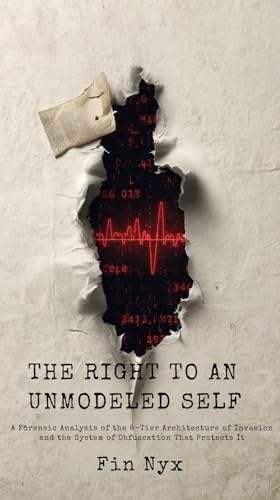
The Right to an Un-Modeled Self

The complete forensic analysis of the 8-tier architecture of covert control.

The Right to an Un-Modeled Self by Fin Nyx

Chapter 7 of The Silent Harvest — from

The Right to an Un-Modeled Self

The complete forensic analysis of the 8-tier architecture of covert control.

Voices from the Inside

First-person accounts from those who have been tracked, scanned, and harvested. Stories from inside the system. The human cost of biometric surveillance.

The Silent Harvest • Section 3: Personal Testimonies

These are not abstract statistics or theoretical concerns. These are real people. Real lives disrupted. Real bodies violated without consent. The following testimonials were collected from individuals who discovered—sometimes by accident, sometimes through data breaches, sometimes through sheer coincidence—that their most intimate biological data had been harvested, analyzed, and weaponized.

Some names have been changed to protect ongoing litigation. Some details have been generalized to prevent re-identification. But every story is real. Every violation happened. Every voice matters.

"They Were Mapping My Nervous System"

— High School Teacher, 42, California

"It started with the smart boards. Our district installed them during COVID for 'hybrid learning.' They had microphones, cameras, temperature sensors. We thought it was for attendance, for checking if kids were paying attention. Then I got sick.

"COVID changed me. Long COVID. Brain fog, fatigue, anxiety. I thought it was just the virus. But my doctor—she's part of a research network—noticed patterns in my vitals. My heart rate, stress levels, sleep patterns. They didn't match long COVID. They matched... something else.

"She showed me the data breach alert. Someone had accessed a database with my biometric responses to the smart board system. Not just whether I was present. But my stress levels, my engagement, my emotional state—measured through physiological responses to content they were showing us. The company called it 'engagement analytics.' I call it violation.

"They knew when I was exhausted. They knew when I was frustrated with students. They knew when I was angry about curriculum changes. And they sold this data—to textbook publishers, to professional development companies, to the district itself to evaluate performance.

"Now the anxiety is permanent. I can't stand in front of a camera without wondering what it's measuring. I can't use a microphone without thinking about voice analysis. The district didn't tell us. The company apologized, but they kept the data. They're still using it. I can't work. I can't teach. I can't even look at technology without shaking.

"They weren't testing engagement. They were harvesting our nervous systems. And I'm trapped inside the data they stole."
Data Points Harvested:

• Heart rate variability (continuous)
• Voice stress analysis (daily)
• Facial temperature changes (real-time)
• Engagement metrics (behavioral)
• Emotional response patterns
• Predictive burnout indicators

"My Body Clock Belonged to Amazon"

— Warehouse Worker, 28, New Jersey

"Amazon isn't just my employer. They own my biology. The wearables they gave us—smart watches, ring scanners, temperature scanners—weren't for safety. They were for optimization. But what they optimized was us.

"I worked in fulfillment. Ten hours a day, four days a week. The watch tracked my steps, my heart rate, my body temperature, my sleep. They said it was for heat safety during summer, for COVID monitoring. But the algorithms—they knew everything.

"If my heart rate was too high, they'd send me home. If my temperature was elevated, they'd put me on 'light duty.' If I wasn't sleeping enough, they'd adjust my schedule. All automatic. No human manager. Just algorithms deciding when I was 'fit to work.'

"Then I got the data breach notice. Someone had accessed Amazon's employee biometric database. Not just my data—everyone's. The breach summary showed what they collected: stress levels, fatigue indicators, productivity metrics, even emotional state predictions.

"The worst part? They were selling this data. Not just to their own systems. To health insurance companies. To workplace monitoring vendors. To researchers studying 'optimal human performance.' My heart rate, my body temperature, my sleep patterns—commodities.

"Now I can't get a job without wearables. Everything requires biometric monitoring. I'm branded as 'difficult' because I refused. But if I don't submit, I can't work. My body—my biology— belongs to whoever buys the data.

"They called it 'workforce optimization.' I call it biological slavery. And I can't escape it."

Data Points Harvested:

• Continuous biometric monitoring
• Fatigue prediction algorithms
• Stress response patterns
• Productivity efficiency metrics
• Predictive health risk scoring
• Emotional state classification

"My Campus Was an Experiment"

— University Student, 20, Massachusetts

"Our university didn't just lecture about psychology—they practiced it. The 'Smart Campus Initiative' was supposed to help students. Mental health monitoring, study optimization, campus safety. But it was something else entirely.

"We got smart wristbands for wellness tracking. They monitored sleep, heart rate, stress. Classrooms had facial recognition for attendance. The library used gait analysis. Dining halls tracked eating patterns. All for our own good, they said.

"Then I joined the campus newspaper. We got a tip—University was partnering with a major tech company on 'predictive student success algorithms.' They were using our biometric data to train AI. Not just helping us—but studying us.

"The data breach revealed everything. The university had profiles on every student: our stress patterns before exams, our attention during lectures, our emotional responses to different subjects. They knew when we were lonely, when we were anxious, when we were depressed. And they shared this with 'educational technology companies.'

"Some students got targeted ads based on their emotional states. Lonely students fed dating app promotions. Anxious students fed therapy app services. Depressed students fed antidepressant counseling services. Not recommendations—predatory marketing.

"The university apologized. They stopped the program. But the data? It's still out there. Companies built their AI systems on our biology. And we can't get it back. We're research subjects who never consented to the study.

"They weren't helping students succeed. They were training AI to manipulate vulnerable people. And we were the lab rats."

Data Points Harvested:

• Predictive academic performance markers
• Emotional vulnerability identification
• Attention and engagement patterns
• Social isolation indicators
• Mental health risk scoring
• Consumer behavior prediction

"They Were Mapping My Compassion"

— ER Nurse, 36, Illinois

"Healthcare requires empathy. Or at least it used to. My hospital implemented 'AI-powered workforce optimization' during the nursing shortage. Smart watches that monitored stress, voice analysis that detected fatigue, camera systems that tracked emotional response to patients.

"They said it was for burnout prevention. If I showed signs of compassion fatigue, I'd be sent on break. If my voice patterns indicated stress, they'd adjust my workload. But the algorithm didn't care about burnout—it cared about liability risk.

"I discovered through a FOIA request—they were scoring nurses on 'emotional investment.' Too much concern for a patient? Risk factor. Too much time with difficult cases? Inefficiency. The AI identified empathy as a productivity problem.

"My smart watch data was included in a research data breach. It showed exactly what the hospital had been measuring: my heart rate around dying patients, my stress during emergencies, my emotional patterns throughout shifts. All packaged into 'nurse performance metrics.'

"Now I can't be myself around patients. I can't show genuine concern without worrying about what the algorithm will think. I can't express grief without it being recorded as 'stress indicator.' The very thing that makes me a good nurse—my humanity—is what the system penalizes.

"The hospital's 'compassion scores' are being sold to healthcare consulting firms. They're creating training programs to teach nurses how to optimize emotional responses. Not to be more caring—but to score higher on the algorithm.

"They didn't want to prevent burnout. They wanted to commodify compassion. And they did it by harvesting our hearts."

Data Points Harvested:

• Emotional engagement scoring
• Compassion fatigue indicators
• Empathy pattern analysis
• Burnout risk prediction
• Nurse-patient interaction metrics
• Performance optimization markers

"My Independence Became a Liability"

— Retired Engineer, 73, Arizona

"After my wife died, I wanted to stay independent. My children bought me 'smart home' devices for safety. Voice assistants, motion sensors, health monitoring watches. They said it was so they'd know if I fell, if I needed help, if I was okay.

"The devices helped. But they also watched everything. The voice assistant listened all the time. The motion sensors tracked my patterns 24/7. The watch monitored my sleep, my heart rate, my activity. They called it 'elder care monitoring.' I called it surveillance.

"When I declined moving into assisted living, my children became concerned. They checked my data. The devices showed I was eating less, sleeping more, moving less. They didn't ask—they just assumed I was declining. They got a court order for 'protective guardianship' based on algorithmic assessment.

"In reality, I was grieving. I was adjusting. I was perfectly capable of taking care of myself. But the data patterns—lower activity, changed sleep, voice analysis indicating depression—were interpreted as 'cognitive decline.' The algorithms didn't understand grief. They only understood patterns that flagged risk.

"I fought the guardianship in court. My lawyer got the data analytics reports. They showed how the algorithm labeled my normal grieving as 'deterioration.' How long periods of contemplation were coded as 'inactivity risk.' How voice emotion analysis marked loneliness as 'cognitive impairment.'

"I won, but the damage is done. My children and I barely speak. They trust the algorithms more than they trust me. The monitoring companies market these devices as 'aging in place' technology. But they're 'aging out of autonomy' technology.

"They promised independence but delivered institutionalization. And they did it by monetizing my loneliness."

Data Points Harvested:

• Cognitive decline risk scoring
• Independence viability metrics
• Grief identification patterns
• Loneliness susceptibility markers
• Fall risk prediction
• Guardianship necessity indicators

Common Patterns of Violation

Data Collection Methods

  • Wearable Devices: Smart watches, fitness bands, health monitors
  • Environmental Sensors: Smart boards, cameras, microphones
  • Workplace Systems: Time clocks, security scanners, productivity tools
  • Voice & Facial Recognition: Attendance, security, emotional analysis
  • Behavioral Tracking: Gait analysis, attention metrics, engagement patterns

Impact on Victims

  • Anxiety & Hypervigilance: Constant awareness of being monitored
  • Loss of Autonomy: System removes human decision-making
  • Emotional Suppression: Victims learn to regulate natural responses
  • Economic Harm: Employment discrimination, insurance issues
  • Relationship Damage: Trust erosion with institutions and family

The Most Insidious Pattern

Every victim reported the same progression: initial acceptance of technology for safety or convenience, followed by discovery that their biological responses were being analyzed, classified, and commodified without their knowledge or consent. The violation wasn't just the data collection—it was the transformation of intimate biological signals into marketable products. Each person became both subject and commodity in systems that operated under the guise of helping, optimizing, or protecting them.

Your Voice Matters

If you suspect your biometric data has been harvested, you are not alone. These stories are just the beginning. Thousands of others are discovering violations every day. Join the fight for biological sovereignty.

Fin Nyx Available on Amazon

The Right to an Un-Modeled Self

The complete forensic analysis of the 8-tier architecture of covert control.

These testimonies are real. The full book documents the technical systems behind every violation described here — and the legal pathways to hold perpetrators accountable.

More Books by Fin Nyx

The Right to an Un-Modeled Self by Fin Nyx
PRIMARY

The Right to an Un-Modeled Self

The complete forensic analysis of the 8-tier architecture of covert control.

Get on Amazon
Biological Sovereignty by Fin Nyx
NEUROWEAPONS

Biological Sovereignty

The battle for your mind in the age of neuro-warfare.

Get on Amazon
The Transparent Self by Fin Nyx
SURVEILLANCE

The Transparent Self

How surveillance systems strip away the private self.

Get on Amazon
View Complete Library on Amazon →
Fin NyxAvailable on Amazon

The Right to an Un-Modeled Self

The complete forensic analysis of the 8-tier architecture of covert control.

These testimonies are real. The full book documents the technical systems behind every violation — and the legal pathways to hold perpetrators accountable.

All 6 Books by Fin Nyx

Every book is built on verifiable patents, documented evidence, and legal precedent.

ARCHITECTURE

The Right to an Un-Modeled Self

The complete forensic analysis of the 8-tier architecture of covert control.

Get on Amazon
NEUROWEAPONS

Biological Sovereignty

The battle for your mind in the age of neuro-warfare.

Get on Amazon
COVERT OPS

The Architecture of Covert Self-Invasion

How covert systems invade the self without detection or consent.

Get on Amazon
DIRECTED ENERGY

The Silent Battlefield

Microwave, directed energy, and neural stimulation — the invisible war on your body.

Get on Amazon
ALGORITHMS

The Algorithmic Shadow

How algorithmic systems cast a shadow over your identity, choices, and freedom.

Get on Amazon
SURVEILLANCE

The Transparent Self

How surveillance systems strip away the private self.

Get on Amazon
View Complete Library on Amazon →