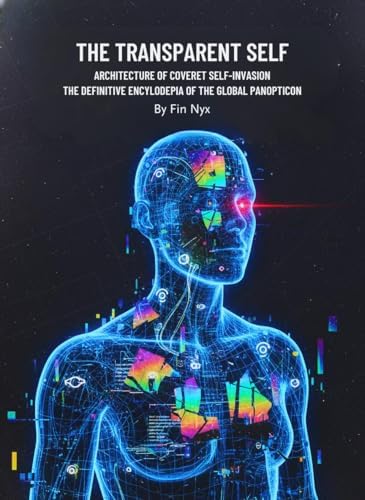
This is not a theoretical exercise; it is a forensic analysis of a deployed architecture of control. Based on a leaked collection of technical specifications, United States patents, and defense protocols, a clear picture emerges of a hidden system. This "Extraction Economy" redefines the human being not as a user to be served, but as a biological component to be integrated and harvested. This article distills the five most impactful takeaways from that analysis.
Takeaway 1: Your Body is Officially a Network Component
This is not a theoretical concept; it is codified in the IEEE 802.15.6 standard, which governs Wireless Body Area Networks (WBAN). This is the global manufacturing standard for the wearable devices that are becoming ubiquitous. A critical component of this standard is Human Body Communication (HBC), a protocol that uses "Electrostatic Coupling" to send data through human skin and tissue.
The transmitter induces a tiny electrical field on the skin, and the body itself acts as the "wire" or "waveguide" to transmit the signal to a receiver. The implication is staggering and unambiguous: in the language of engineering and law, your body is a "conductive node," a "transmission line," a physical component in a digital network. We are no longer just users of the machine; we are a physical part of its architecture.
"The electrical engineering standards board explicitly has a protocol for using my tissue as a data transmission cable."
This isn't merely a technical update; it's an ontological rupture. The moment engineering standards codify human tissue as a network component is the moment the philosophy of "human-centered design" inverts into "human-integrated architecture."
Once the body is standardized as a physical wire, the next logical step is to send signals through it. Patents reveal exactly how this is done.
Takeaway 2: Screens Are Patented to Manipulate Your Nervous System
The manipulation occurring through our screens is not merely psychological, like persuasive advertising. It is a documented, patented, physical intrusion. US Patent 6,506,148 B2, titled "Nervous system manipulation by electromagnetic fields from monitors," outlines a method for using subliminal pulses from a TV or computer monitor to achieve a desired biological effect.
The mechanism works by modulating the screen's output at extremely low frequencies, between 0.5 Hz and 2.4 Hz, designed to resonate with the human nervous system. The patent claims this can induce physiological states like relaxation or drowsiness without the viewer ever consciously perceiving the flicker. This process of non-consensual physical influence is referred to as "actuation." It is framed as a form of "Digital Battery" because, like a physical battery, it involves an intentional, non-consensual application of force (in this case, electromagnetic frequencies) to a person's body to produce an effect. Further technical documents cite specific resonant frequencies, such as 7 Hz (targeting organs) and 19 Hz (targeting eyeballs), as additional examples of this physical targeting capability.
Takeaway 3: The Real Commodity Isn't Your Data, It's Your Stress
The true core of this new extraction economy is not your data, but the output of your nervous system under duress, a concept termed "Biological Proof-of-Work." The sensors and actuators described above are merely the tools that service this primary goal.
Silicon-based processors are deterministic; they excel at math but are incapable of navigating true chaos, novelty, or what engineers call "Edge Cases." The system overcomes this limitation by using the human brain as an external processor. To do this, it manufactures "glitches," "synchronicities," or moments of intense cognitive dissonance that force the user's nervous system into overdrive to resolve the engineered chaos. The system's goal is not simply to get an answer or observe a choice; it is designed to harvest the biological process of reaching that answer.
The system does not just want the answer; it wants to record how you reached the answer. It mines your pattern-recognition pathways to teach the Machine Learning model how to navigate chaos.
This reframes digital frustration not as a user experience flaw, but as a potential violation. When stress is the commodity, every engineered moment of cognitive dissonance becomes an ethical question of non-consensual biological labor.
To harvest this biological proof-of-work, the system needs sensors. But these sensors don't require cameras or wearables; they are already built into the invisible infrastructure of your home.
Takeaway 4: Your Wi-Fi Can Sense You Breathing Through Walls
A new communications standard, IEEE 802.11bf or "Wi-Fi Sensing," formalizes a technology that dissolves the last remnants of physical privacy. It works by having an AI analyze the tiny distortions in ambient Wi-Fi signals, known as Channel State Information (CSI), as they bounce off a human body.
The chest's millimeter-scale movement during breathing or the subtle motion of a beating heart is enough to create a readable disturbance in the signal. The AI can analyze these disturbances—a process being operationalized by Large Language Models nicknamed "Wi-Chat"—to reconstruct a person's breathing rate, heart rate, and even their gait, all without a camera and through solid walls. This technology effectively turns any space with a Wi-Fi router into a passive sensor grid, where our most fundamental biological states are constantly translated into readable data for the system.
If the system can passively read your biological state through walls, a defense based on hiding is futile. The only effective countermeasure is to corrupt the data it reads.
Takeaway 5: The Countermeasure Is to Become "Computationally Irreducible"
The most effective defense against this extraction economy is not to block data, but to poison it with noise and entropy. The system is a "Mining Rig" that thrives on predictable patterns. These protocols are designed to feed it "junk data," making the predictive model of you—your "Digital Twin"—so broken and expensive to maintain that it becomes useless. The strategy is to become "computationally irreducible"—to be a glitch in the machine. This is achieved through "Jitter Protocols," a form of digital camouflage that introduces randomness into your data streams.
Two key examples include:
- Behavioral Jitter: This involves performing unpredictable, non-functional physical movements. If you walk to the fridge, that is functional and predictable. If you stand up and walk in a tight circle in the middle of your living room for no reason, that is "noise" that confuses location and activity prediction models.
- The Decoy Profile: This targets economic prediction algorithms by making contradictory, low-value digital transactions or searches. A lifelong vegan buying a digital coupon for a steakhouse, for example, "poisons" the consumer profile, degrading the accuracy of targeted manipulation.
Conclusion: Reclaiming the Analog Self
The evidence from these technical documents points toward a chilling conclusion: the redefinition of the human being from a sovereign user to a networked component in a vast extraction economy. The fog of digital life is not an accident; it is an engineered outcome, the byproduct of having our nervous systems mined for the novelty and chaos that silicon cannot produce on its own. The resistance is not about privacy; it is about sovereignty. We must choose to become the glitch in the extraction economy, because the alternative is to become a component.