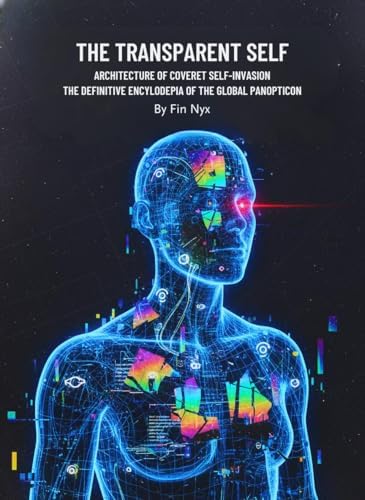
Beyond Data Theft: How Technology Commits Digital Battery

Related reading
The Right to an Un-Modeled Self
The complete forensic analysis of the 8-tier architecture of covert control.
Research Resource
This analysis explores the legal framework of Digital Battery and technological violations for research and educational purposes. This is not legal advice. The information provided is intended for research and educational use only.
There is a common, almost ambient feeling of unease that accompanies our deep immersion in modern technology—a sense of exhaustion or agitation that is difficult to pinpoint. We often dismiss it as simple screen fatigue or information overload. But what if this feeling is not just a psychological byproduct, but a faint perception of a documented physical reality? What if the devices and signals that surround us are designed to do more than just transmit data?
This article moves beyond vague feelings and into the realm of verifiable facts. The nature of technological violation is shifting from abstract data theft to a concrete form of physical trespass and biological coercion. Drawing from public patents and official industry standards, we will assemble the evidence for a new legal and philosophical framework to understand this harm: the tort of Digital Battery, which requires four elements: unconsented contact, intent to actuate, and measurable harm.
The Element of Contact: Your Wi-Fi Can See Through Walls
The first element of any physical violation is contact. In the digital age, this no longer requires a physical touch. The Wi-Fi signals filling your home and office are now standardized to make uninvited, physical contact with your body's "biofield." A formal industry standard known as WLAN Sensing, codified under IEEE 802.11bf, has officially turned common Wi-Fi infrastructure into a form of through-wall radar. Because it is an industry standard, this capability is not speculative; it is an ironclad vector of proof, stronger than any single patent.
The technology works by analyzing how your body disturbs the wireless signals constantly bouncing around a room. Using a method called Channel State Information (CSI), devices can interpret the subtle changes in these signal bounces to extract highly sensitive biometric data. This includes your heartbeat, your respiration, your gait energetics, and even the micro-movements that allow for the prediction of intent. The 802.11bf standard means that the router in your living room has the built-in capability to monitor the breathing patterns of a person in the next room. This act of remote sensing—a signal physically intersecting with and measuring your body—establishes the element of contact required for a new definition of physical trespass.
The Element of Intent: Your Screen is Patented for Actuation
The second element is intent. The documented purpose of these systems extends beyond passive extraction to active biological influence, or "actuation." According to US Patent 6,506,148 B2, titled "Nervous system manipulation by electromagnetic fields from monitors," the very screens we watch can be used to directly manipulate a nearby person's nervous system.
The patent's core mechanism is deceptively simple: it uses subliminal, low-frequency electromagnetic pulses (between 0.5 Hz and 2.4 Hz) emitted from the screen to excite a "sensory resonance" in a person's nervous system. The patent claims this can induce a range of physiological effects without the subject's awareness, including specific bodily responses like "ptosis of the eyelids" (a clinical term for the drooping of the upper eyelid). This is not a vague claim of suggestibility; it is a documented intent to cause a direct, physical, and non-trivial muscular effect.
Perhaps the most startling fact is that the patent expired in June 2021, placing the invention in the Public Domain. This confirms the capability is not a protected secret but a standard, widely available feature. The patent's own text contains a sobering admission of its designed intent:
"This is unfortunate since it opens a way for mischievous application of the invention, whereby people are exposed unknowingly to manipulation of their nervous systems for someone else's purposes."
The Element of Harm: Your Stress Has Become the Product
The final element is harm. The economic engine driving this new paradigm is the "Extraction Economy," a business model that produces a specific, measurable form of physiological injury. In this model, the most valuable commodity is not just your browsing history, but your metabolic and cognitive stress.
This model relies on a concept called "Biological Proof-of-Work" (BPoW). The system is designed for "manufacturing anxiety and cognitive dissonance to force the user's nervous system to achieve resolution, extracting value from the metabolic labor expended during this stress." Each cortisol spike from an anxiety-inducing headline, each dopamine hit from a notification, serves as metabolic labor that validates and refines the system's predictive models. This constant, sub-perceptual interrogation of the nervous system results in a quantifiable physical injury known as Autonomic Dysregulation. This harm is defined by measurable physiological markers, including the chronic elevation of cortisol and the suppression of Heart Rate Variability (HRV), which are linked to a host of long-term health problems.
Conclusion: The Verdict on Digital Battery
The evidence is clear. The technologies of through-wall biometric sensing, patented neurological actuation, and the economic harvesting of stress are not siloed curiosities. They are the components of a systemic violation that satisfies the classic legal requirements for battery:
- Contact is proven by the physical reality of Wi-Fi signals and other remote signals intersecting with the human biofield.
- Intent is proven by the explicit language of patents designed for covert biological actuation.
- Harm is proven by the measurable autonomic dysregulation caused by an economic model that monetizes stress.
- Lack of Consent is self-evident in the covert and obfuscated nature of these systems.
These three examples are merely the tip of a systemic iceberg that includes technologies like Remote Photoplethysmography (using cameras to read your pulse), RF Beam Locking (using 5G signals for centimeter-level tracking), and Human Body Communication (using your skin as a conductive wire for data). The fundamental nature of technological violation has shifted. We have moved beyond data theft and into an era of biological coercion, compromising our very right to biological sovereignty.
This forces us to reconsider the fundamental nature of personal boundaries. In a world of invisible signals and remote sensing, where do the boundaries of our own bodies truly end?